In the early days of telehealth, the technologies for capturing and transmitting video were already available. Major manufacturers were beginning to put them into mobile telemedicine stands, competing on the sophistication of the equipment.
We started from the other end: what did the people in the hospital actually need to do?
From technology to adoption
Technology creates an opportunity. A product brings technologies together into something that can be used. But a product is still built around what its maker offers. It becomes a solution when it is adapted to what a particular customer needs to accomplish.
That is where innovation reaches adoption: when an idea becomes part of how people actually work.
In 2013, the Center for New Medical Technologies needed surgeons to be able to consult remote specialists during complex procedures. The initial request sounded simple: transmit video between hospital departments. But that was only the starting point.
The specification arrived through conversation
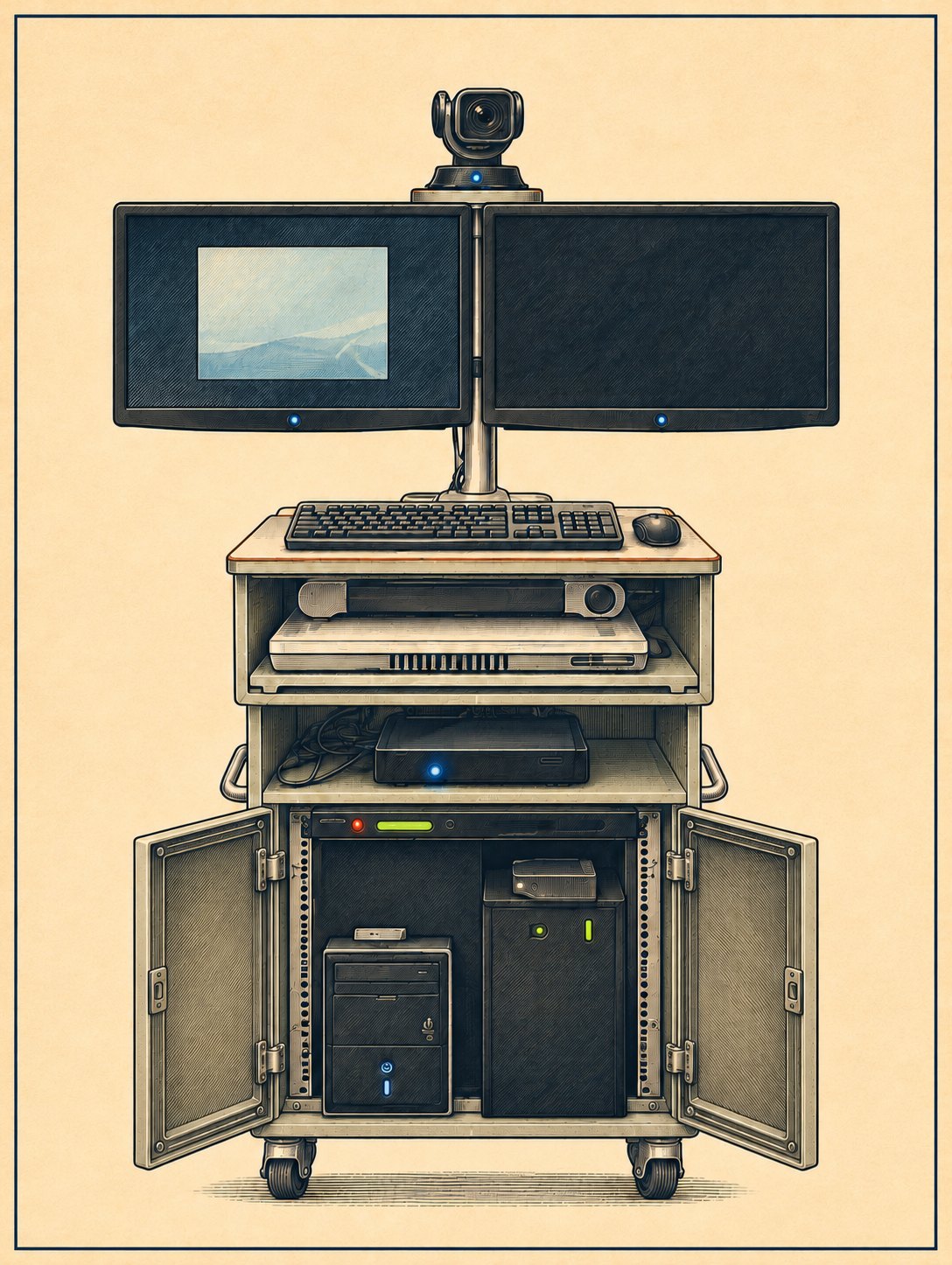
The people doing the work kept identifying what the stand needed to handle. Medical devices had different video outputs, so the system needed to switch between them. Consultations needed a second screen for outside opinions. Surgeries needed to be recorded. Paper documents needed to travel alongside the video.
Each request described a practical problem. Together, they defined the solution.
We assembled it using the technology available to us: a mobile stand that connected medical devices, switched between video sources, recorded and transmitted consultations, displayed a second opinion, and sent documents alongside the video. It ran on two cables and could be operated by a trained employee.
The stand cost a fraction of comparable telemedicine systems on the market.
One solution, a product that could adapt
The stand went to work at the institute. It connected equipment to the assembly hall, supported surgical master classes with specialists from across the country, and moved from room to room as needed.
But we had not designed every part for one fixed configuration. The stand was modular. After the first implementation, those modules formed a product that could be adapted to another clinic's equipment, workflows, and needs—and become its custom solution.
The product was reusable because the solution had come first.
In 2014, the project won Best Telemedicine Project at the national Top 10 IT Projects for the Public Sector competition, and business magazine Status featured the work on its cover.
Technology makes innovation possible. Adoption is what puts it to work.