Regional IT markets buy projects: a tender, a scope, a team assembled for the occasion, a deadline, and a margin that has to be found again on every contract. 2B Group sold into that market and was built to work differently from it.
Why does every project start from zero?
A project company sells hours. When the contract ends, most of what the team learned leaves with the team, and the next tender pays for the same learning again. A product company sells work it has already done once. The difference shows up in the margin first, then in hiring, then in which clients the company can afford to turn down.
A reusable component that nobody reuses is a project with extra documentation.
The portfolio as the operational structure
Instead of chasing arbitrary contracts, 2B Group organized its entire operating structure around a defined product portfolio of nine solution areas for ten industries: surveillance and access control, computing, engineering and navigation systems, software and IT consulting, videoconferencing and multimedia, information security, telecommunications, and street lighting efficiency.
Having a fixed portfolio changed how every part of the organization functioned:
- Product managers as the bridge: Rather than letting sales sell unbuildable promises or letting engineers build without commercial discipline, product managers sat at the intersection—aligning technical competence, sales targets, vendor partner programs, and client constraints.
- Vendor leverage and cash flow: Concentrating volume within specific portfolio lines secured direct tier-one vendor status and credit lines. In public procurement, where government payments routinely lag by months, that margin cushion and working capital protected the balance sheet.
- Competence tied to sales: Engineering certifications weren't personal perks; they were budgeted strictly to deepen capabilities in portfolio lines that sales was actively taking to market.
- Vertical positioning: Marketing and sales didn't talk about server specs. They targeted specific sectors—healthcare, municipal government, education, banking—selling predictable business outcomes from proven portfolio blocks.
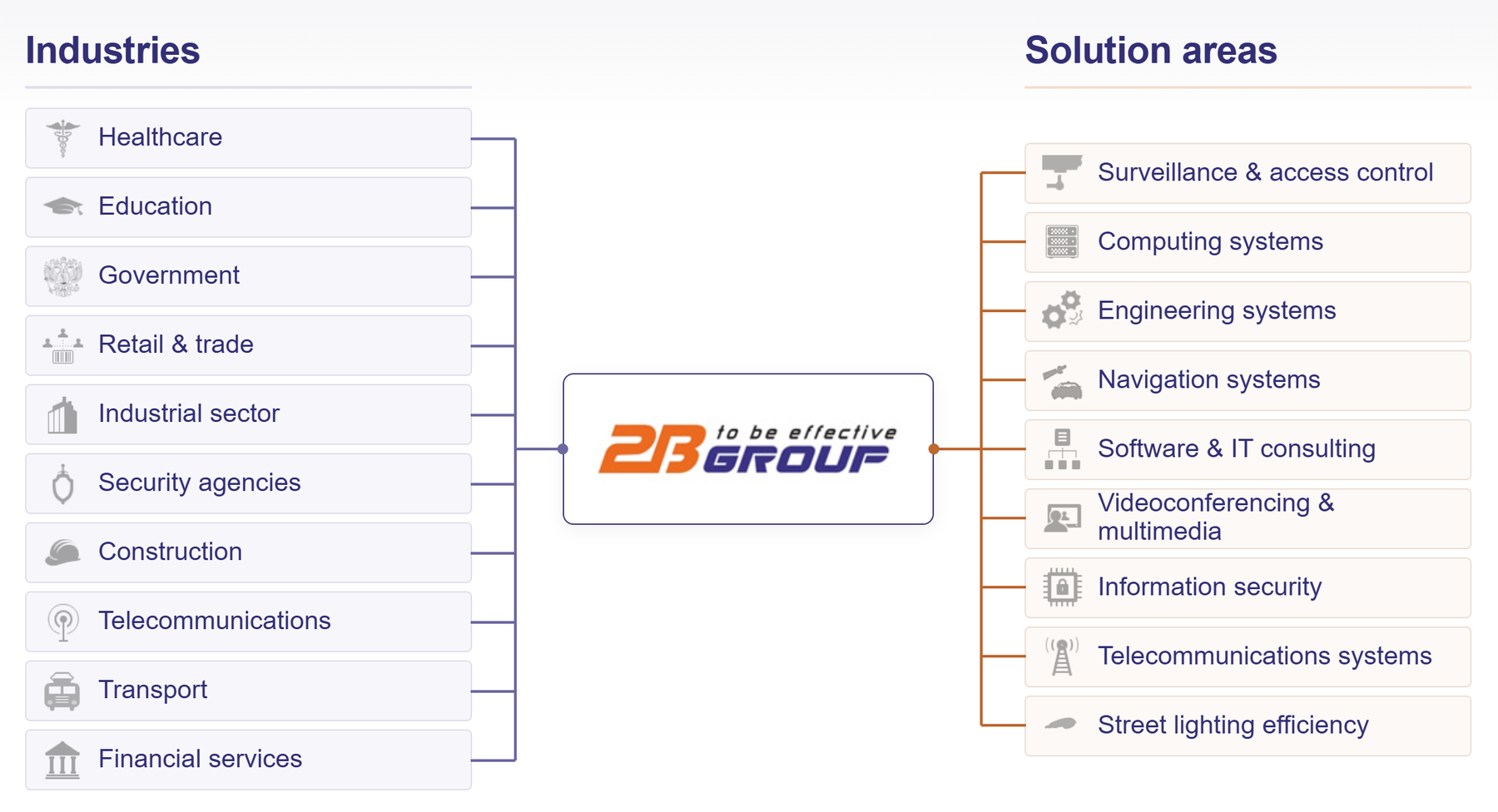
Turning integrator tenders into product frameworks
We entered the market as a standard systems integrator, bidding under public procurement laws for fixed-price, fixed-scope government contracts. But we approached delivery with an entirely different mandate.
Whenever a tender presented an opportunity to solve a systemic problem, we didn't write disposable custom code. We used the project to design and validate a repeatable product framework. That discipline was how our software arm, 2B Soft, was built.
The client received their contract delivered on schedule and within budget. 2B Group retained a tested, modular software platform that became part of the permanent portfolio, ready to be deployed to the next customer at a fraction of the original engineering cost.
The industry noticed
A young regional company displacing traditional legacy contractors attracted substantial independent press coverage. Expert Siberia profiled the company’s manufacturing-style discipline in a feature titled "IT Forest Orderlies," and business magazine Status ran a cover story on our medical automation systems.
The work was validated at both the civic and national levels:
- The Novosibirsk Board of Honors: 2B Group was placed on the official Board of Honors by the mayor’s office in Novosibirsk—the third-largest city in Russia—for its contribution to the regional economy.
- Best Public Sector IT Project: National Top 10 IT Projects for the Public Sector award for our municipal services platform in Barnaul.
- Best Telemedicine Project: National public sector award for our mobile operating-room telehealth complex.
- Global CIO Project of the Year: Selected by the national CIO community for our clinical rehabilitation platform.
- Open Source Contribution: Special diploma from the Russian Association of Open Source Software (RASPO).
The company grew from four people to 80 specialists, delivering more than 150 projects across Russia, maintaining a 16% EBITDA margin, and returning initial investor capital in under two years.
The market decides how it buys. It does not decide how you build.